

Bringing the Global Wildfire Community Together: CTIF Vice President Participates in Stanford International Wildfire Convening and Red Sky Summit
Thank you for choosing Automatic Translation. Currently we are offering translations from English into French and German, with more translation languages to be added in the near future. Please be aware that these translations are generated by a third party AI software service. While we have found that the translations are mostly correct, they may not be perfect in every case. To ensure the information you read is correct, please refer to the original article in English. If you find an error in a translation which you would like to bring to our attention, it would help us greatly if you let us know. We can correct any text or section, once we are aware of it. Please do not hesitate to contact our webmaster to let us know of any translation errors.
San Francisco, California | 3–4 November 2026
The growing intensity, complexity and destructive potential of extreme wildfires require more than individual national responses. They call for international cooperation, shared knowledge and a stronger connection between science, technology and operational experience.
With this perspective, CTIF Vice President Zisoula Ntasiou participated in two important international gatherings in California: the Stanford International Wildfire Convening, hosted at Stanford University on 3 November, and the Red Sky Summit, held on 4 November in San Francisco.
Stanford International Wildfire Convening – 3 November
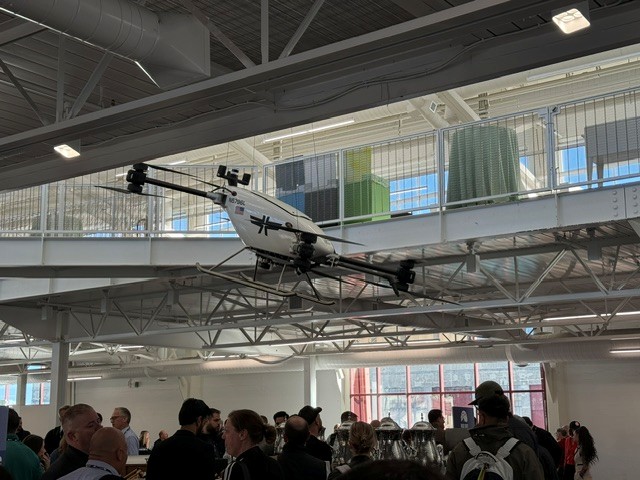
The Stanford International Wildfire Convening brought together representatives from 17 countries, creating an exceptional opportunity for dialogue and collaboration among people and organisations working at different levels of wildfire management.
What made this initiative particularly significant was the opportunity to bring together, around the same tables, operational wildfire professionals, scientists, researchers, technology companies and data experts.
For the first time, these different communities had the opportunity to engage in a shared discussion, moving beyond their individual areas of expertise to explore how their knowledge and capabilities could be combined to address the growing global wildfire challenge.
Discussions focused on identifying practical solutions, improving our understanding of extreme fire behaviour, making better use of scientific knowledge and technological innovation, and translating data into timely and effective operational decisions.
Representing the European operational perspective, Zisoula Ntasiou contributed insights drawn from her experience with the Hellenic Fire Service and Greece’s challenging wildfire seasons. She highlighted the importance of ensuring that scientific developments and new technologies respond to the actual needs of those managing incidents on the ground.
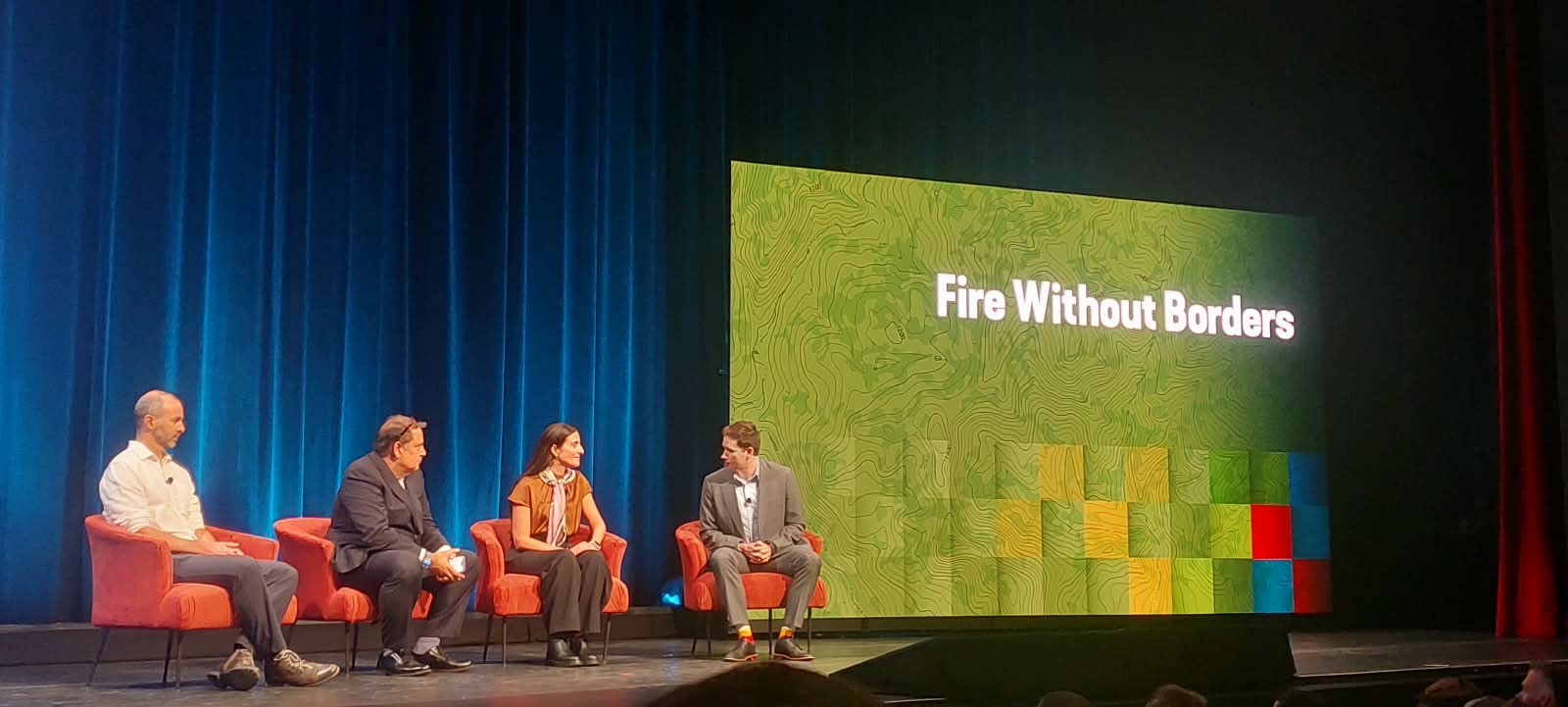
Bringing these perspectives together is essential. Technology and data can provide powerful tools, but their real value emerges when they support operational decision-making and help protect human lives, communities and natural ecosystems.
Red Sky Summit – 4 November
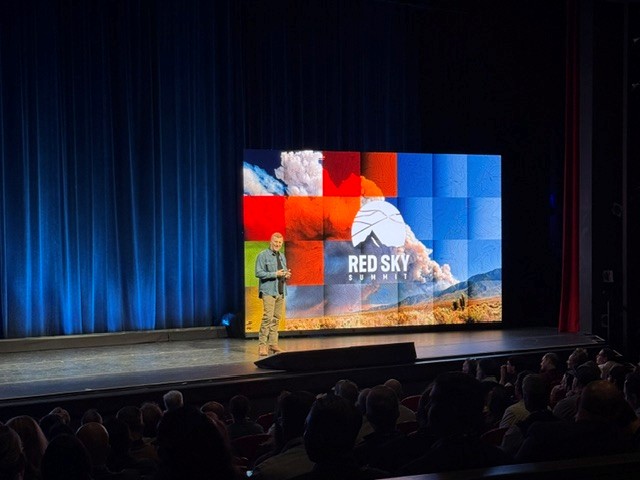
The following day, the Red Sky Summit continued the international dialogue, bringing together senior government officials, political leaders and governors, CAL FIRE leadership, representatives of organisations, technology innovators, researchers and experts.
The Summit provided an important platform for high-level discussions on the future of wildfire management, the growing risks associated with extreme fire events, investment in innovation, community resilience and the need for stronger cooperation between countries and sectors.
The discussions highlighted that the wildfire challenge extends far beyond firefighting operations. It involves preparedness, prevention, early detection, intelligence, risk reduction, community protection and the ability to make informed decisions under increasingly complex conditions.
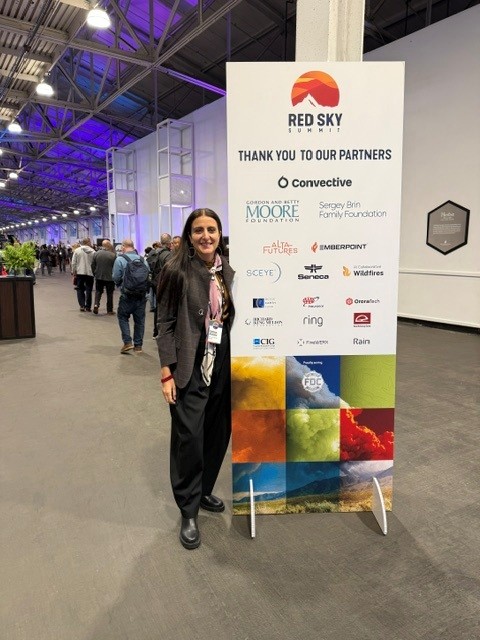
During the Summit, Zisoula Ntasiou shared the European and Greek operational perspective, bringing forward lessons from the field and the experience of managing increasingly demanding wildfire events in the Mediterranean region.
Her participation also provided an opportunity to exchange experiences with international leaders and experts, and to strengthen connections between the European wildfire community and initiatives taking shape in the United States and elsewhere.
Connecting Experience, Science and Innovation
Reflecting on the two days, Zisoula Ntasiou emphasised the importance of bringing different professional backgrounds and perspectives together:
“I feel truly honoured and grateful to have been part of these important discussions. After many years working in wildfire operations, I strongly believe that none of us can face the challenges of extreme wildfires alone. We need science, operational experience, technology, reliable data and, above all, people willing to share their knowledge and work together. What made these meetings particularly meaningful was the opportunity to sit around the same table with people from different countries and disciplines, all committed to finding better ways to protect lives, communities and our natural environment.”
For CTIF, participation in these international initiatives reinforces its role as a global platform connecting fire and rescue services, operational professionals, scientific communities and institutions. It also strengthens the exchange of knowledge and lessons learned across borders, contributing to a more coordinated and effective international approach to wildfire risk.
Wildfires do not recognise borders. Our knowledge, cooperation and commitment to action should not recognise them either.