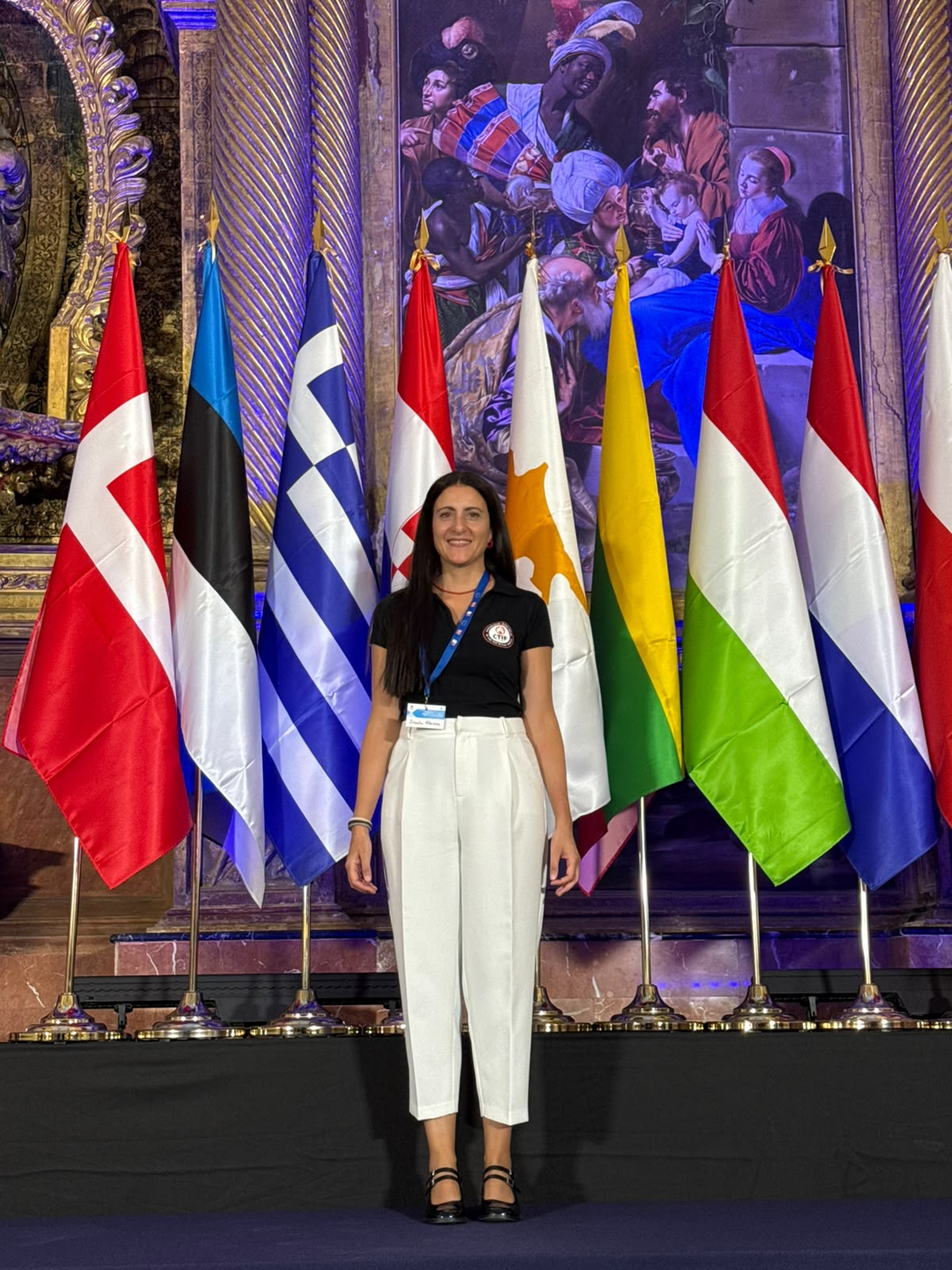
CTIF Vice‑President Zisoula Ntasiou briefed EU regions on the rising wildfire risks
Thank you for choosing Automatic Translation. Currently we are offering translations from English into French and German, with more translation languages to be added in the near future. Please be aware that these translations are generated by a third party AI software service. While we have found that the translations are mostly correct, they may not be perfect in every case. To ensure the information you read is correct, please refer to the original article in English. If you find an error in a translation which you would like to bring to our attention, it would help us greatly if you let us know. We can correct any text or section, once we are aware of it. Please do not hesitate to contact our webmaster to let us know of any translation errors.
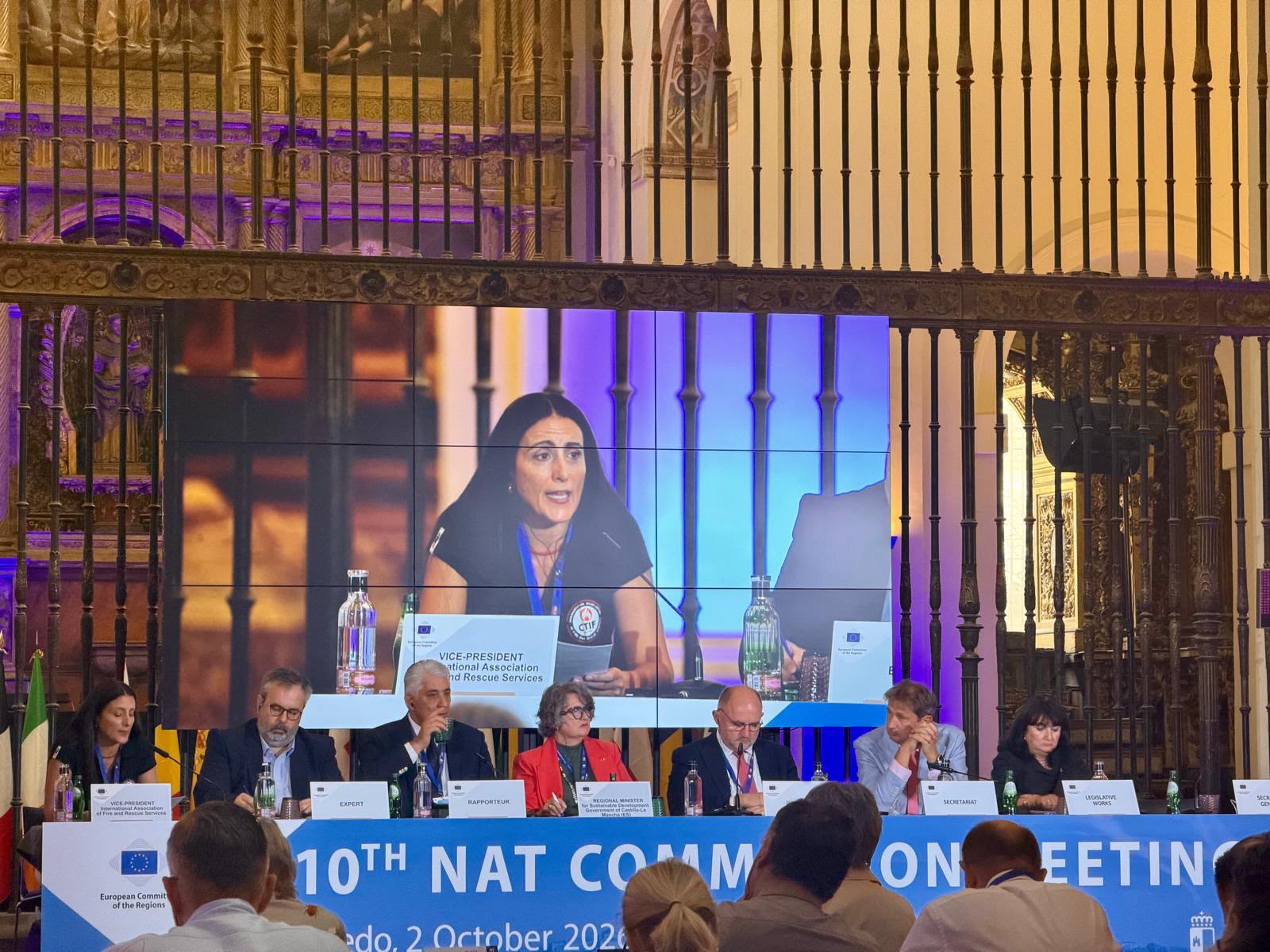
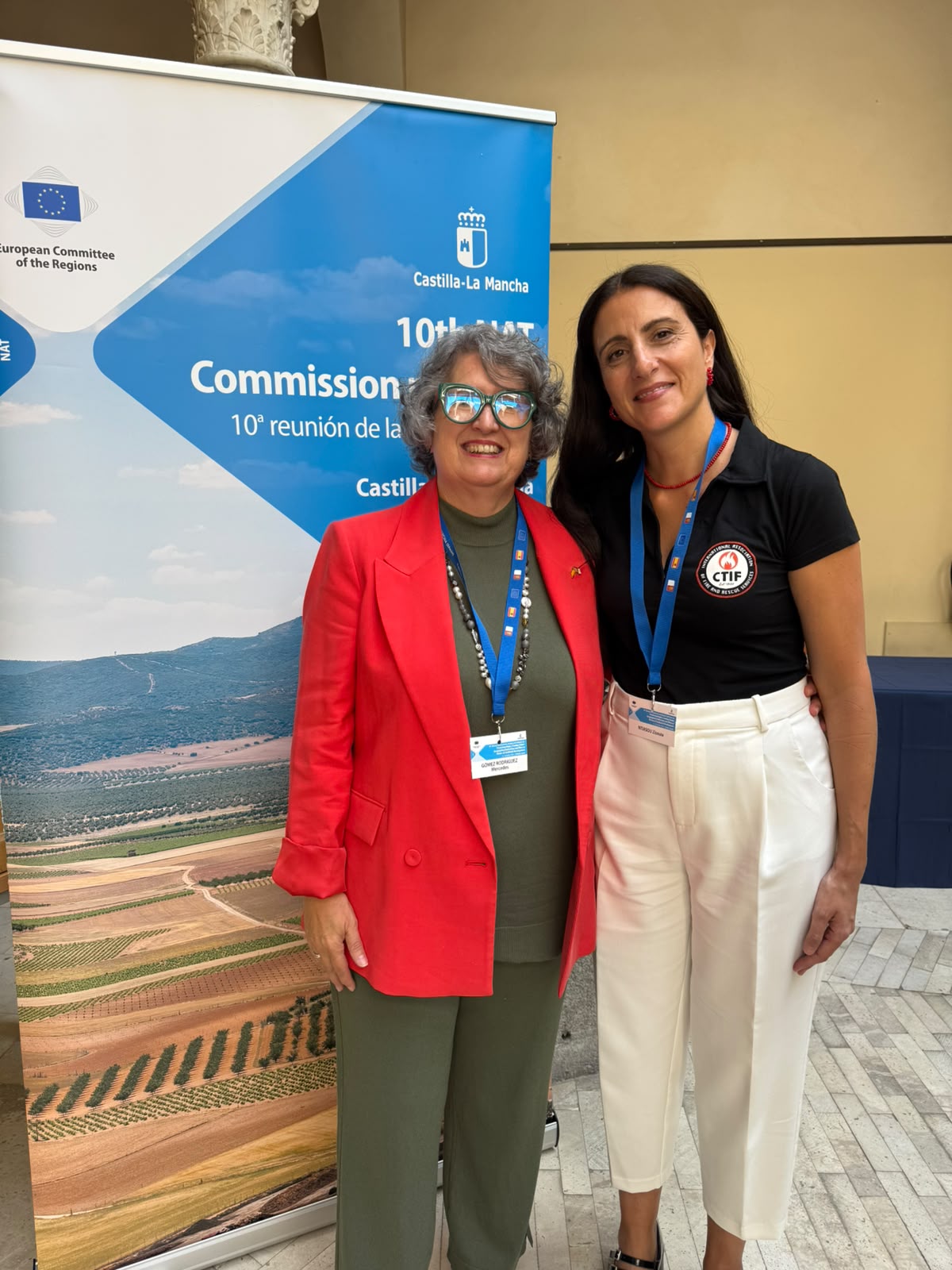
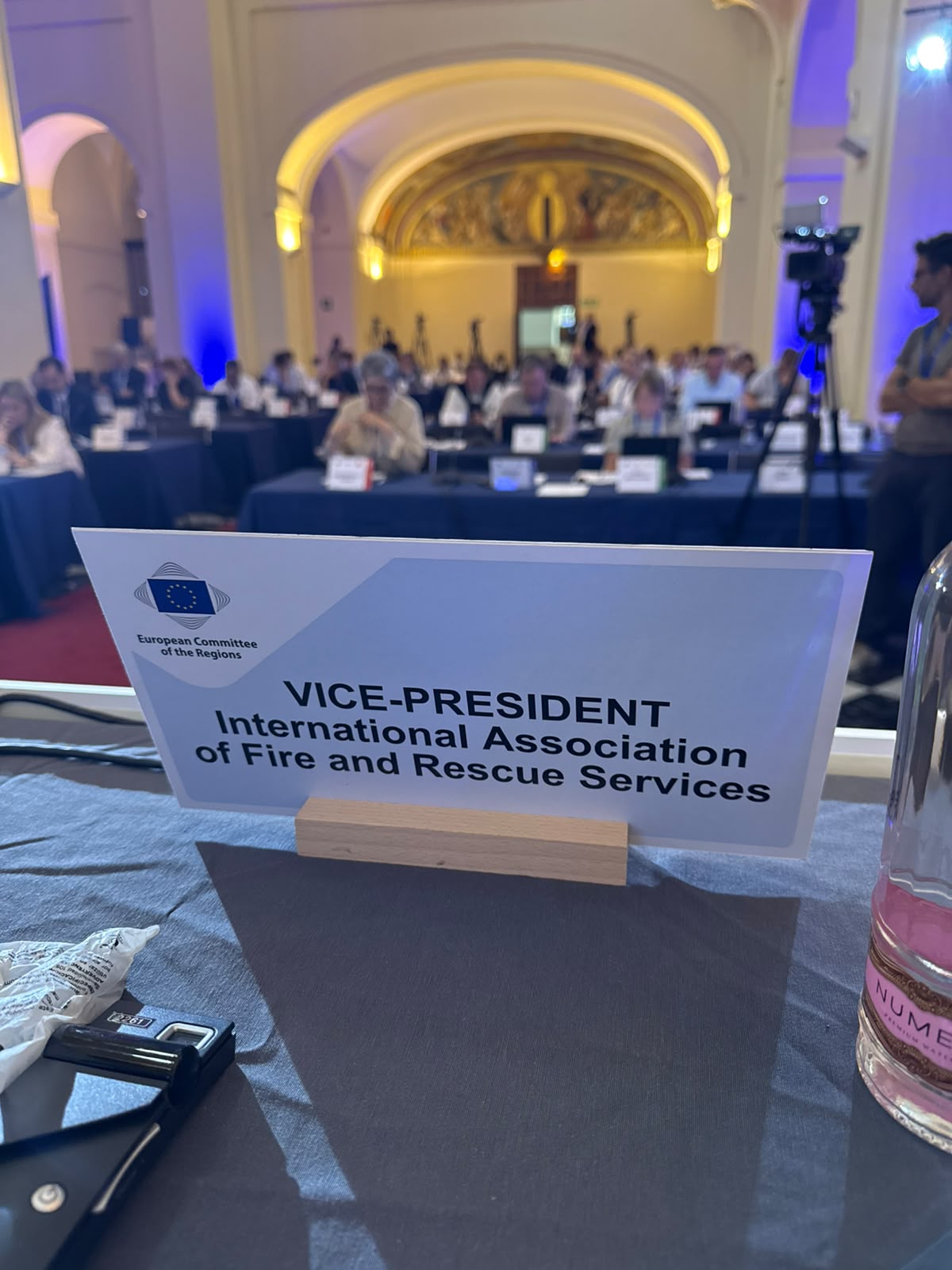
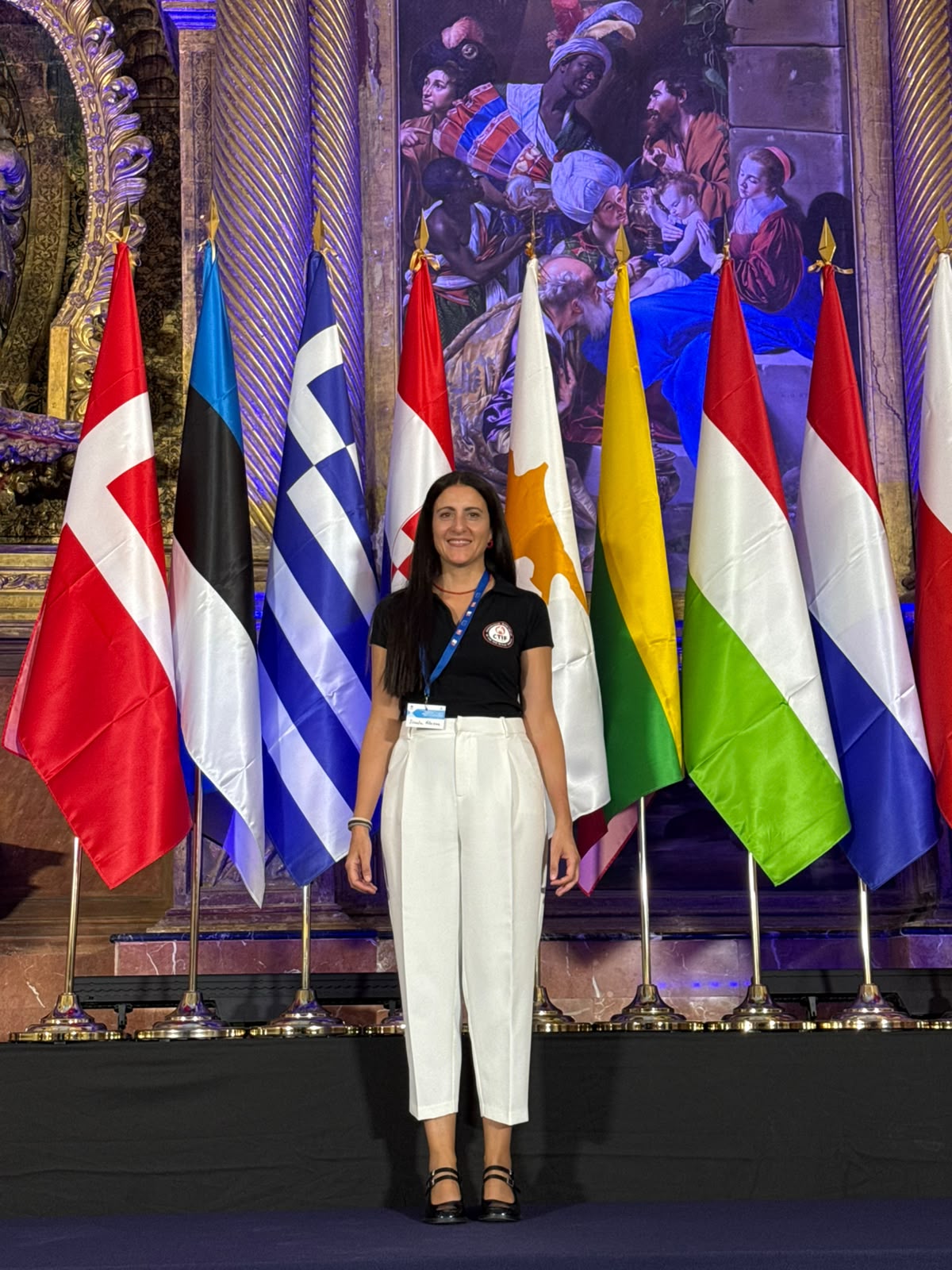 On October 2nd, Zisoula Ntasiou, vice‑President of CTIF and Secretary of the CTIF Forest Fire Commission, presented in a high‑level meeting of the European Committee of the Regions (CoR) in Toledo, Spain.
At the meeting she contributed operational perspective of firefighters and first responders to the EU’s ongoing work on Integrated Wildfire Risk Management. Her presentation formed part of the CoR’s debate on a new draft opinion led by Dimitrios Kafantaris, Municipal Councillor of Pylos‑Nestoros, member of NAT – Commission for Natural Resources and Rapporteur for the CoR opinion “Integrated Wildfire Risk Management”.
During the session, which followed a summer described by EU officials as “devastating,” Ntasiou outlined key lessons emerging from the 2026 European wildfire season. She emphasized the increasing complexity of fire behaviour, the influence of extreme weather, and the growing exposure of communities, all of which are driving more challenging evacuations and response operations across Europe.
Her remarks aligned with broader concerns raised during the meeting, where members noted that today’s wildfires often behave unpredictably and have become “extreme phenomena.”
Ntasiou stressed that operational experience from the field must be integrated into Europe’s wildfire‑resilience strategies, complementing scientific research, policy frameworks, and local and regional governance. She highlighted the need for stronger prevention, preparedness, and cross‑border operational cooperation, echoing the CoR’s call for year‑round wildfire risk management adapted to local conditions.
Her participation ensured that the perspectives of CTIF and its Forest Fire Commission were represented in an important EU policy discussion at a moment when wildfire impacts, costs, and complexity continue to rise across the continent.